


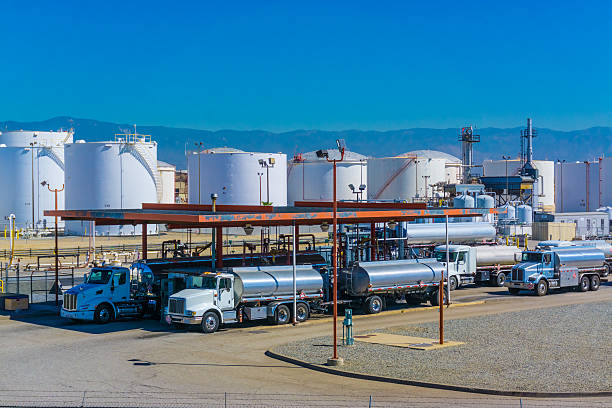
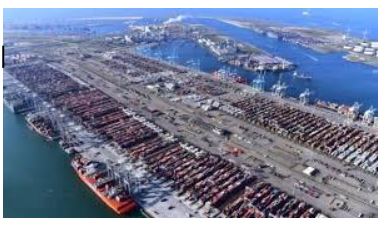
Rotterdam Terminal
The Port of Rotterdam is the largest seaport in Europe, and the world's largest seaport outside of East Asia, located in and near the city of Rotterdam, in the province of South Holland in the Netherlands.
From 1962 until 2004, it was the world's busiest port by annual cargo tonnage. It was overtaken first in 2004 by the port of Singapore, and since then by Shanghai and other very large Chinese seaports. In 2020, Rotterdam was the world's tenth-largest container port in terms of twenty-foot equivalent units (TEU) handled. In 2017, Rotterdam was also the world's tenth-largest cargo port in terms of annual cargo tonnage.
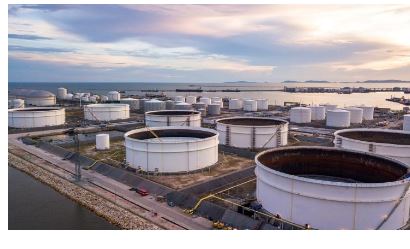
Amsterdam Terminal
As the largest petrol port in the world, Amsterdam is a leading player in the oil market. The existing, large and flexible tank storage terminals attract a lot of blending activity.
Trading companies and traders from large oil companies in
particular are willing to invest. As a result, Amsterdam is a
major international hub where gasoline is mixed and traded.
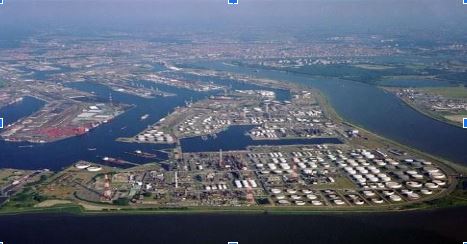
Antwerpen Terminal:
The Port of Antwerp is the port of the city of Antwerp, Belgium. It is located in Flanders, mainly in the province of Antwerp, but also partially in East Flanders. It is a seaport in the heart of Europe accessible to capesize ships. It is Europe's second-largest seaport, after that of Rotterdam. Antwerp stands at the upper end of the tidal estuary of the Scheldt. The estuary is navigable by ships of more than 100,000 Gross Tons as far as 80 km inland. Like the Port of Hamburg, the Port of Antwerp's inland location provides a more central location in Europe than the majority of North Sea ports.
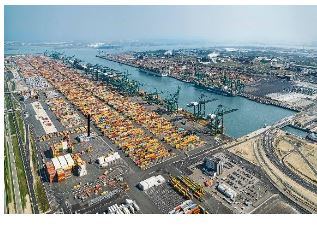
De havens van Antwerpen zijn verbonden met het achterland via spoor, weg en rivier- en kanaalwaterwegen. Hierdoor is de haven van Antwerpen een van de grootste zeehavens van Europa geworden, met een tweede plaats na Rotterdam wat betreft totale verscheepte vracht. De internationale ranglijsten variëren van de 11e tot de 20e plaats (AAPA).In 2012 behandelde de haven van Antwerpen 14.220 zeeschepen (190,8 miljoen ton goederen, waarvan 53,6% in containers) en 57.044 binnenschepen (123,2 miljoen ton goederen) en bood lijndiensten aan naar 800 verschillende maritieme bestemmingen.
Houston Terminal
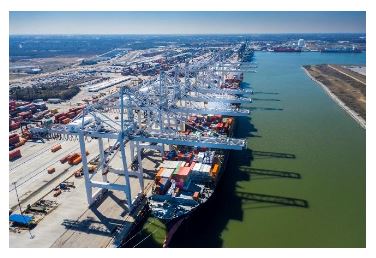
The Port of Houston is one of the world's largest ports and serves the metropolitan area of Houston, Texas. The port is a 50-mile-long (80 km) complex of diversified public and private facilities located a few hours' sailing time from the Gulf of Mexico. Located in the fourth-largest city in the United States, it is the busiest port in the U.S. in terms of foreign tonnage and the busiest in the U.S. in terms of overall tonnage. Though originally the port's terminals were primarily within the Houston city limits, the port has expanded to such a degree that today it has facilities in multiple communities in the surrounding area. In particular the port's busiest terminal, the Barbours Cut Terminal, is located in Morgan's Point.
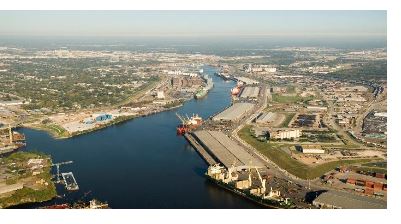
The Port of Houston is a cooperative entity consisting of both the port authority, which operates the major terminals along the Houston Ship Channel, and more than 150 private companies situated along Buffalo Bayou and Galveston Bay.
Many petroleum corporations have built refineries along the
channel where they are partially protected from the threat of
major storms in the Gulf of Mexico. The petrochemical complex
associated with the Port of Houston is one of the largest in the
world.
complex dat bij de haven van Houston hoort, is een van de grootste ter wereld.